About

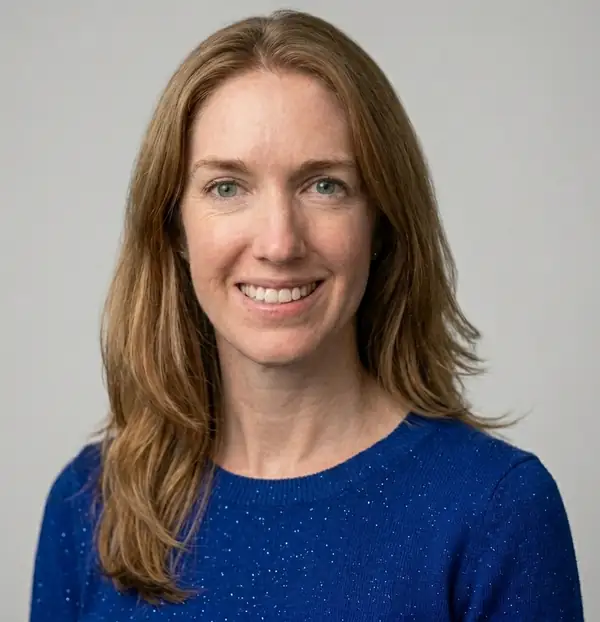
Meredith Lewis, operations executive and M&A integration advisor at Foundational Operations

Meredith Lewis, operations executive with international expansion experience

I don't come in with a theoretical framework. I've personally done the work I now advise on.

I started with an engineering undergraduate degree, added an MBA, and spent the 15+ years since inside operations rather than adjacent to it. My first professional years were in management consulting at Accenture in Chicago, where I learned how to enter an unfamiliar operation, find the actual constraint, and build something the client could keep running.

From there I moved in-house. At Intel I worked on large-scale process transformation and the reporting infrastructure behind it. At Elastic I spent nearly eight years in operations leadership, reaching director level and leading a department of 25+ in the final 18 months. That stretch is where international expansion, operating model design, and acquisition integration stopped being projects I supported and became work I owned.

What I advise on now is the same work. The difference is that I do it at the decision layer, where a leadership team still has time to change the outcome.

The work behind the advice

Three bodies of work define what I bring to an engagement. Each one was built in-house, under real constraints, with the results measured after the fact.

Operational Transformation

I inherited a labor-intensive manual process that ran on spreadsheets, email threads, and individual memory. Every cycle required people to rekey the same data, reconcile versions, and rework what had already been submitted. The cost was invisible on any budget line because it lived inside thousands of hours of internal labor.

I redesigned the process using Lean Six Sigma, cut the handoffs that created rework, and built reporting in SQL with SSRS dashboards so the operating data was visible to the people who owned the outcome rather than trapped in a monthly deck.

The redesign produced $23.7M in cumulative savings over five years from labor hours reclaimed and rework avoided, and it served roughly 24,000 internal users. The durable result was not the dashboard. It was an operating process the organization could run and improve without me.

That instinct for finding the real inefficiency and re-architecting around it isn't a one-time story. In a separate initiative, I architected 167 transformation projects over twelve months, defining KPIs and eliminating bottlenecks across global HR and IT workflows, increasing operational efficiency by 75%.

International Expansion

I architected the international expansion playbook and led the PMO that ran it, then personally led entry into 14+ countries end-to-end. That covered entity setup, statutory compliance, payroll, and benefits design in each market, along with the internal sequencing required to make a launch date real.

The playbook proved that roughly 70% of the work is repeatable and about 30% is genuinely local. Treating those two categories differently is what made each country faster and more predictable than the one before it, instead of every launch feeling like the first.

One of the larger outcomes was transitioning employees off PEO and EOR arrangements onto direct employment, which generated $1.5M in annual savings while giving the company real control over compliance, compensation structure, and employee experience.

M&A Integration

I have led integration across eight completed acquisitions with two more in progress, spanning deal sizes from $40M to multi-billion-dollar transactions. The work was full-function integration rather than a single workstream: people, systems, process, customer commitments, and the reporting that tells leadership whether the deal thesis is holding.

On smaller deals the integration ran to a three-month timeline, which is achievable only when decision rights are settled before close and the integration plan is built around the value the deal was bought for, not around a generic checklist.

The most expensive failures I have seen were not technical. On one deal, integration decisions were made in parallel by functions with no shared escalation path, so conflicting commitments were discovered months later when they were far more costly to undo. Governance is the part most teams under-build, and it is the part I now insist on first.

Work history

  • Elastic

    Director-level operations leadership

    Nearly eight years, leading a department of 25+ in the final 18 months. Global expansion, operating model design, and M&A integration.

  • Intel

    Operations and program leadership

    Large-scale process transformation and reporting infrastructure serving tens of thousands of internal users.

  • Accenture

    Management Consultant, Chicago

    January 2010 to March 2011.

How I approach the work

My value is pattern recognition at the executive level, not task execution. Having done the work myself means I can tell the difference between a plan that will hold and one that reads well in a deck, and I can say so early enough to matter.

I protect two things in every engagement: your economics and your operational risk. That means quantifying the opportunity before recommending spend, sequencing work so the organization can absorb it, and building governance that keeps decisions from being re-litigated. The goal is a company that operates well after the engagement ends.